For my latest articles and special offers, subscribe to Jess Ang's Intuitive Updates here.
Learning Korean For No Good Reason

March 2026
Inner Tug of War
It’s a classic thing about intuition – we get a clear flash about what we want or what would be the best direction to take next, only to then talk ourselves out of it. There are always so many rational reasons for not going with the flow of what feels right, especially if there are big consequences to consider!
However, this phenomenon doesn’t just happen for important life decisions. We can talk ourselves out of little things too, such as taking up a hobby or trying something new.
In You Crazy Vegan, I described the moment when I saw The Handmaid’s Tale sitting on a shelf at a convenience store. I was there to buy a snack for an upcoming train ride, not to buy a book. I rarely looked at novels anyway, as I’d shifted from consuming a great deal of fiction in my adolescence to mostly reading non-fiction books in my twenties and beyond, as I’d become more interested in “real” stories. And so, there was an inner tug of war (totally unnecessary, I now realise in hindsight) as to whether to buy the book or not:
I kept feeling pulled to it. I picked it up, put it down. Took it in my hands again, read the back cover, placed it back on the shelf … I was inwardly protesting in response to this compulsion to read the book … Yet, that little spark of enthusiasm in response to seeing the book was bright enough for me to give in and purchase it. I knew better than to ignore that spark, even if it was tiny.
I thoroughly enjoyed reading The Handmaid’s Tale and didn’t stop there. I went on to buy almost a dozen more books by Margaret Atwood, The Testaments being my absolute favourite. Other works of fiction called to me, and I demolished my husband’s entire Ira Levin collection before he did (he has yet to catch up). There was no real reason for reading all these books, other than that I liked them. I’ve heard people argue in favour of reading fiction for its value and the life lessons it can teach us – sometimes more so than for true stores – but such arguments don’t interest me. Novels haven’t changed my life in any amazing way, but I’m happy about the ones I’ve read because they were enjoyable, and maybe that’s enough of a reason.
Despite this realisation, I recently had that inner tug of war again about another thing – not a book this time, but about learning Korean.
South Korea
While preparing for a previous trip to Seoul, I decided to learn a bit of Korean. I figured it would be respectful to the locals if I could speak some of their language, so I downloaded Duolingo and committed to practice five minutes a day in the two months leading up to it.
Turns out that Korean is not the easiest language to learn. Trying to decipher the written symbols for every vowel and consonant was a big challenge in itself, let alone trying to pronounce each one correctly. I was tempted to give up.
Then, a day or two after feeling it was all too much, I began to really enjoy learning this new language. In a funny sort of way, it was the difficulty of it that appealed to me. It stimulated a part of my brain that loves a good puzzle, the same part that wanted to play endless games of Minesweeper on my friend’s computer on the “impossible” setting, while she insisted on the futility of my quest. Korean appeared to be a puzzle that might not only be satisfying to learn, but could also open a whole new world of language and communication that I didn’t yet know.
As you can imagine, five minutes a day on a free version of Duolingo isn’t exactly enough to become fluent, and many of the phrases I learnt weren’t very relevant, such as: “I have a white car”, or “my cat is 19 years old.” My efforts were also pooh-poohed at times, as I was told: “People speak English in Korea, you know. There’s no point learning it.” Despite this, my enthusiasm grew and I branched out to read more on how to speak and write in Korean. I even borrowed a picture book from a local library, showing numerous photos of different objects with both English and Korean labels.
When it came time to board the plane to South Korea, my travel companion noted that my face lit up with glee as the air hostess greeted us in Korean. I had come to love the sound of the language even if I couldn’t understand much of it.
Upon arriving at the airport, I asked someone if he spoke English. “A little bit,” was the reply. I attempted to say that I don’t speak Korean, in Korean, and asked whether that made sense. He told me, “You said you don’t speak Korean very well, but your pronunciation is very good.” I took that as the highest compliment!
I had fun trying to decode various signs written in Hangul (the Korean alphabet) while walking around the city. Upon seeing the familiar golden arches of McDonald’s, I slowly read aloud the symbols printed underneath: Ma-eek-doh-narl-doo!
Later, I enjoyed a short but sweet conversation with a man and woman behind the counter of a little café, which turned out to be one of the highlights of my trip. I answered their questions about where I was from and how I found their café (it was through HappyCow, which had a surprisingly long list of 100% vegan places in Seoul). They seemed delighted that I could speak a tiny bit of Korean, even if it was “not very well”. They started to say things in English, and I would respond in Korean, for instance:
Question in English: “Was the meal too spicy?”
Me, in Korean: “Spicy? No, it was delicious!”
Our cheerful encounter ended with us saying goodbye and nice to meet you, in both English and Korean.
Learning Korean for No Good Reason
At the airport back in Australia, I deleted the Duolingo app while waiting for my luggage. There seemed no point in continuing to learn more, now that my holiday was over.
Yet, it didn’t take long for me to start missing those little Duolingo lessons. I considered studying another language – Spanish perhaps, or Mandarin or Japanese – but it was Korean that I longed to learn. Just as I’d felt reluctant to let myself purchase The Handmaid’s Tale all those years ago, I struggled to give myself permission to learn Korean without a “proper” reason. There was no plan to return to Korea any time soon, and there was no one I knew who was willing to practice with me at home.
Despite pushing away my desire to the back of my mind, it would still occasionally rise to the surface of my awareness. At the meditation course I wrote about earlier in the year, I found myself dreaming in Korean instead of English on a couple of nights, even though I hadn’t practiced it for months. More recently, I dreamt I was teaching Hangul to a class. Again, I dismissed the experience and resisted the urge to learn more.
Then it dawned on me, isn’t it a good enough reason to do something because it might be fun? Because our intuition says yes? Especially if it doesn’t involve a significant time commitment or the potential for any harm? Why was there a need for me to justify learning Korean? Even I never speak it fluently in future, or go back to Korea, or ever become a K-pop fan, why not learn it anyway simply because I want to? If I lose interest, then I can stop at any time and that’s fine too.
Love What You Do and Find Delight
In the 1992 book Flow by Mihaly Csikszentmihalyi, the original meanings of “amateur” and “dilettante” are mentioned. Both came from Latin words, amare (“to love”) and delectare (“to find delight in”), respectively. This points to an understanding of the merit in doing something for its own sake, rather than to achieve a certain outcome. As the author writes on page 140:
“The earliest meanings of these words therefore drew attention to experiences rather than accomplishments … it has become embarrassing to be called a dilettante, even though to be a dilettante is to achieve what counts most – the enjoyment one’s actions provide.”
The next time we feel called towards something that might be enjoyable, why not talk ourselves into it instead of out of it? We can give ourselves permission to act straight away, instead of demanding that we come up with a good enough reason first. We don’t even need to commit to doing that thing well. As a coach once said at a seminar I attended, “If it’s worth doing, it’s worth doing poorly” (which, incidentally, is consistent with my number one lesson of 2021).
Last night, I had a dream that I was sharing a meal with a friend who could understand Korean, and despite my limited vocabulary, we were laughing and chatting to the best of our ability. I woke up feeling content, with no resistance anymore about learning this language. Today I completed my seventh lesson on Duolingo since reinstalling the app last week. Given how much delight it brings, I’m amused at how long it took me to start learning Korean, for no good reason, once again :)
Click here to receive new articles by email
<-- Previous article Next article -->
Monthly contributions are made to charities including Animals Australia and rescue sanctuaries.

 |
You may like the following articles:
Postal and Courier Delivery from the Guides
Last month something freaky happened that made me start taking intuitive work more seriously, and got me thinking that perhaps our guides have a sense of humour.
So Many Lemons and January Challenge
When asking for spiritual guidance, we may receive an answer that’s confusing at first. Sometimes certain guidance will remain a mystery for months or years....
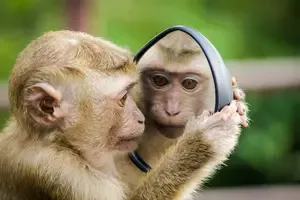
Monkey Thoughts
A statement from one of the Quan Yin Oracle poems includes: “if you are always of two minds, you will live on a battlefield. Still the Monkey thoughts!”